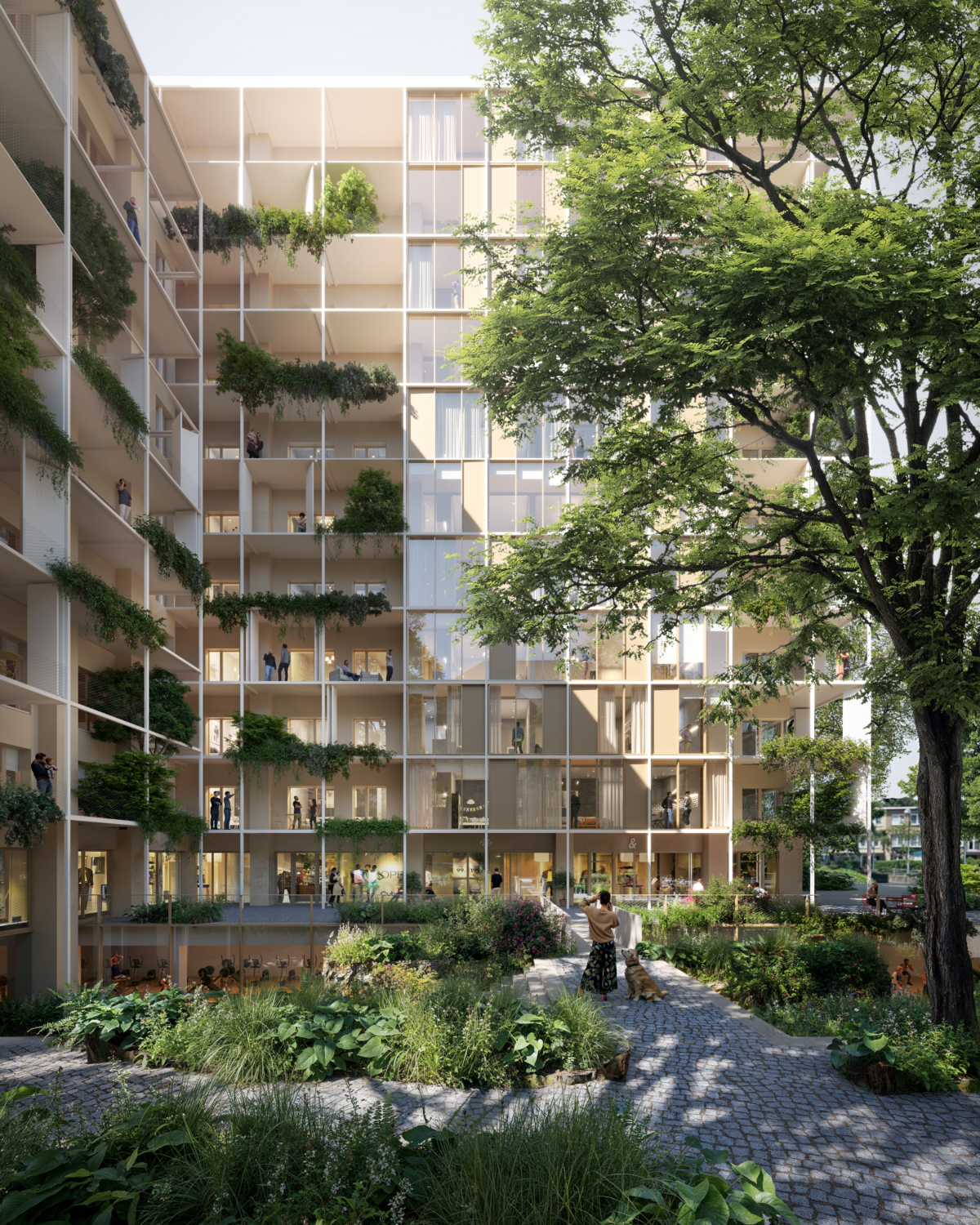
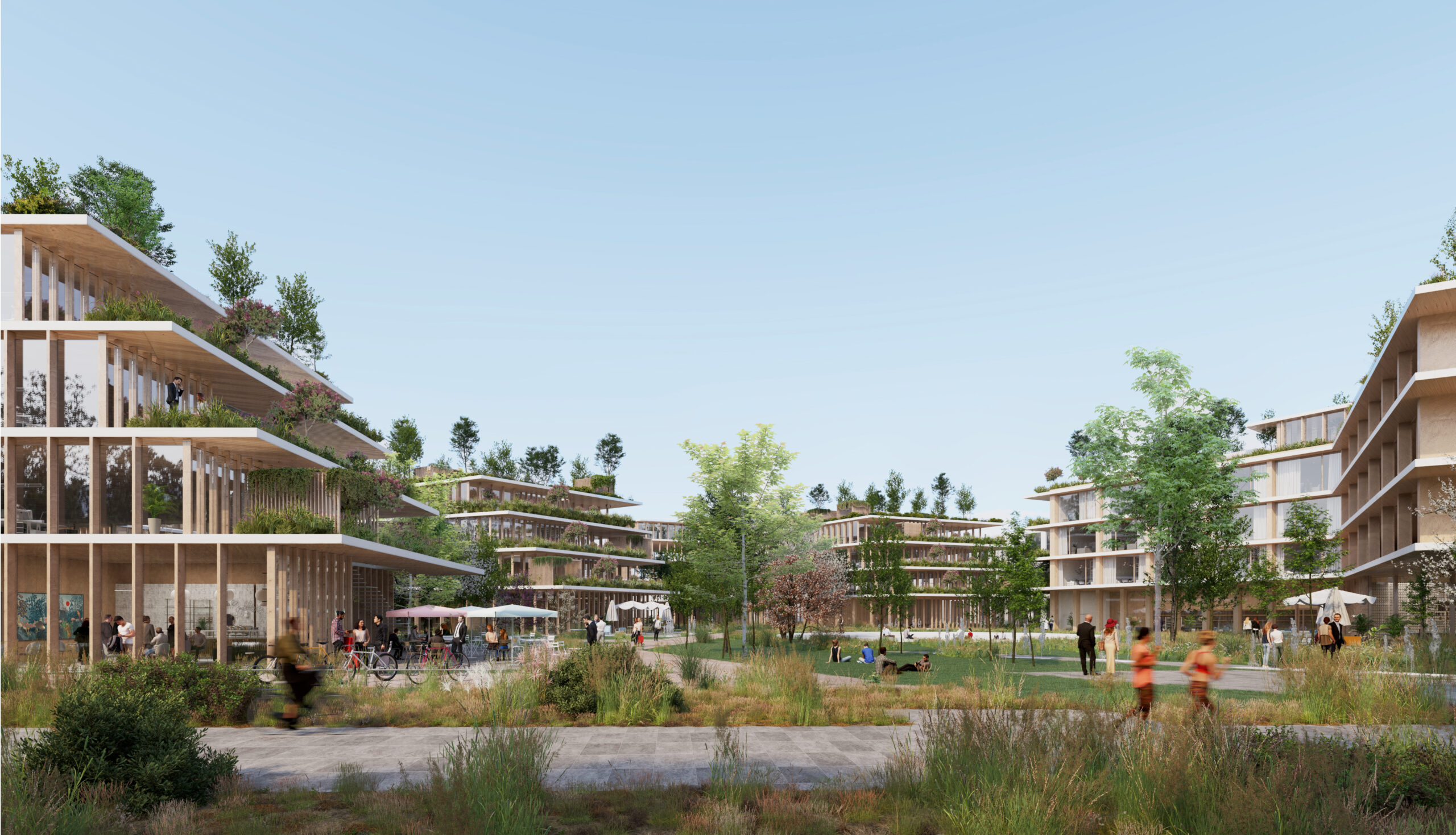
The project responds by integrating landscape as a structuring element of the architecture. Rather than forming a closed urban block, the design is composed of a series of terraced volumes that gradually step down toward a central green space. This configuration allows daylight, vegetation, and outdoor spaces to penetrate the interior of the block.
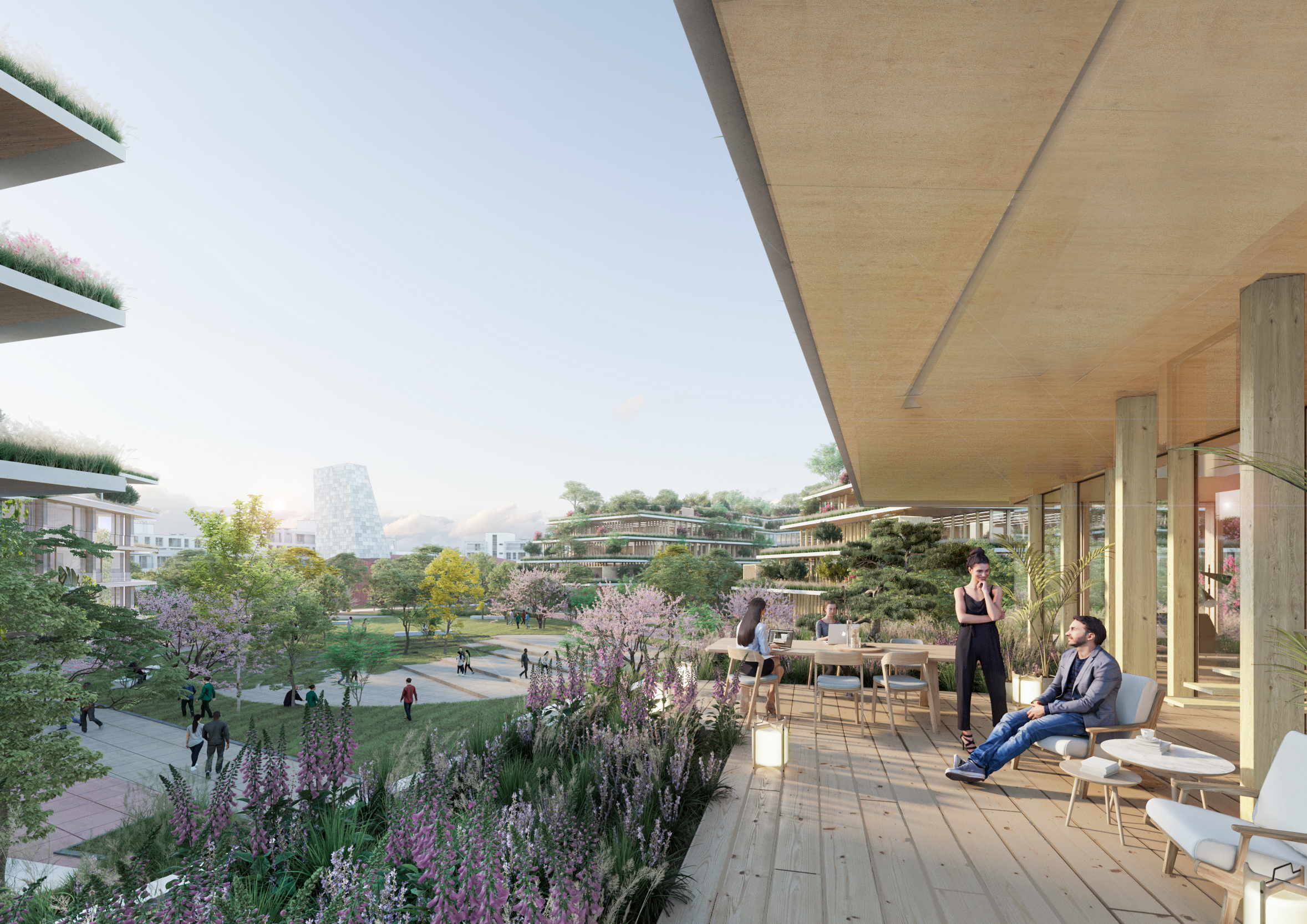
The environmental strategy operates at several levels. The stepped massing improves solar exposure and reduces overheating while supporting passive façade principles. Terraces and planted roofs extend local ecological habitats and contribute to on-site rainwater management. Circulation spaces, roof gardens, and winter gardens provide shared environments that support interaction and user well-being. In this way, landscape becomes an integral component of the building rather than a residual element around it.
- 2021 - ongoing
- Atenor, PWC
- Architecture, Climate Design
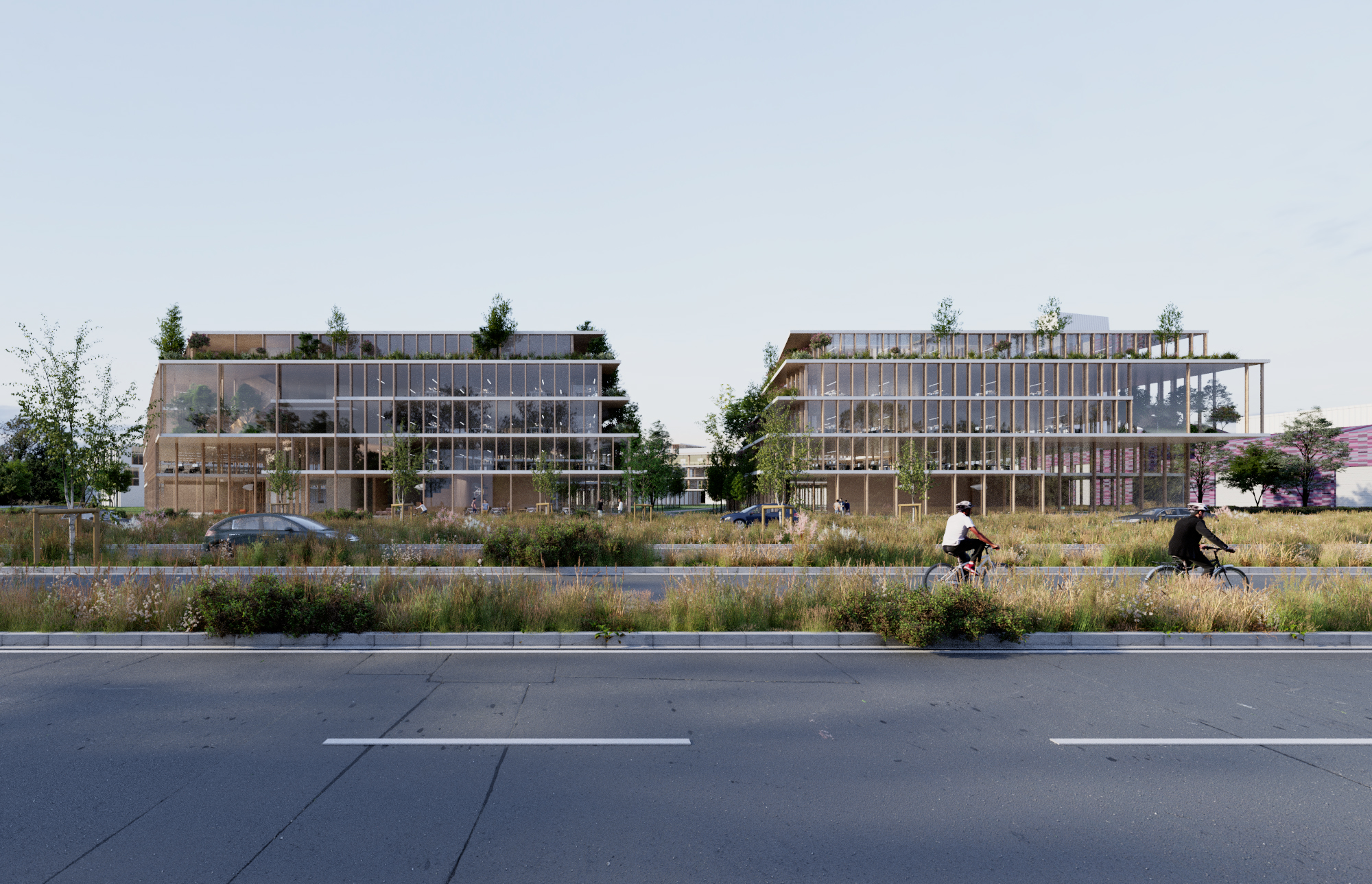
Cloche d’Or has developed rapidly over the past decade, evolving from open land into a dense district combining offices, housing, retail, and infrastructure. This accelerated development produced a clear urban structure, but also raised questions about spatial quality, landscape integration, and the long-term identity of the district.
Large urban fronts and significant building volumes define the area, while green spaces often remain secondary to the built program. Density was primarily driven by programmatic and economic requirements, sometimes leaving limited room for ecological continuity or spatial diversity. The key challenge was therefore to accommodate a high level of density while strengthening the relationship between built form, landscape, and public space, and to contribute to a recognizable identity within a rapidly evolving urban environment.
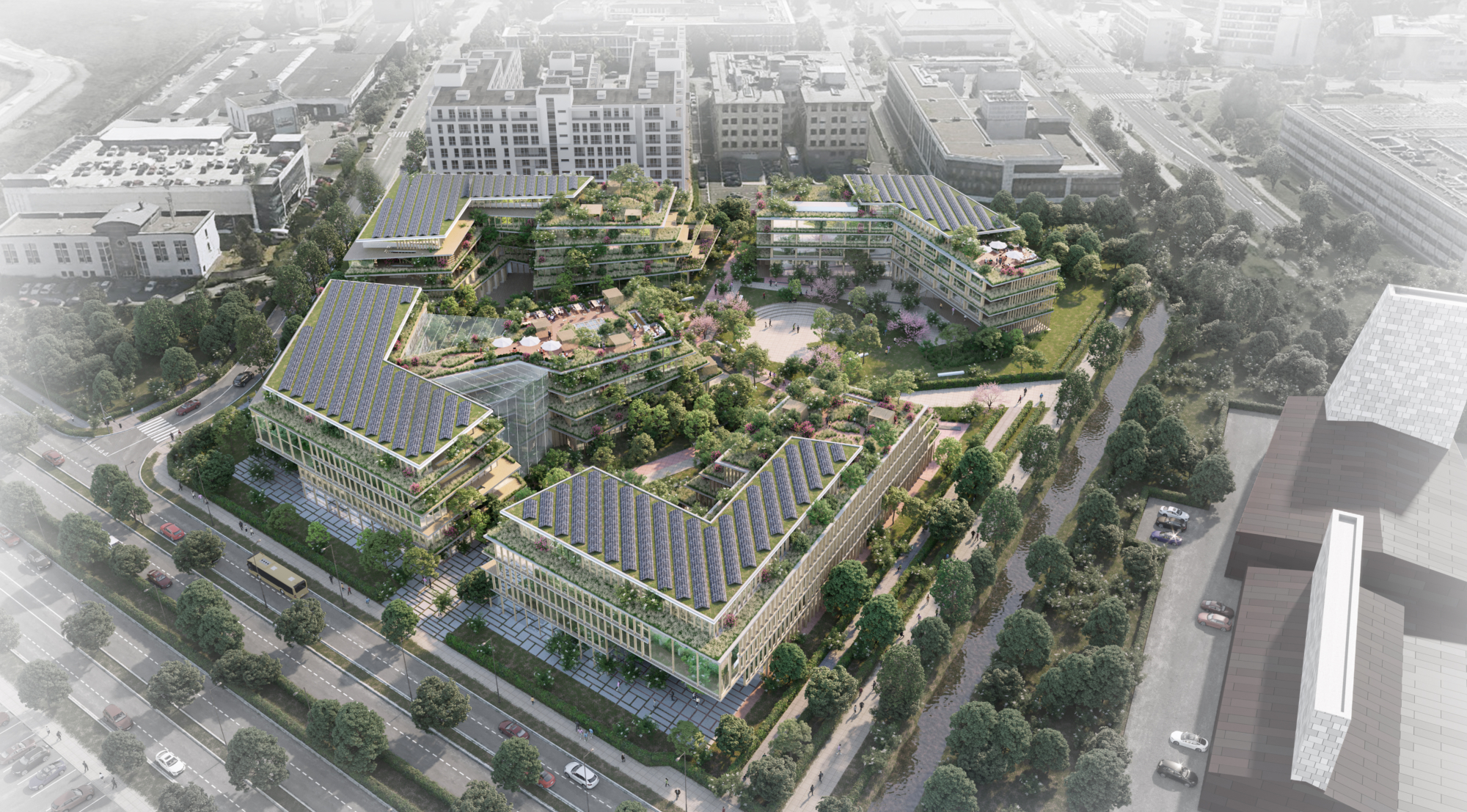
By introducing porosity, terraces, and visible green spaces, the project reduces the perceived scale of the built volumes and strengthens the connection between interior spaces and the surrounding environment. Daylight, views, and outdoor areas are integrated into the daily experience of the users, improving spatial quality within a dense urban context.
More broadly, the project illustrates how urban development can integrate ecological systems rather than displacing them. Landscape is not treated as decoration but as infrastructure that contributes to climate regulation, biodiversity, and user comfort. In this way, the project proposes an approach to district development in which architectural form, environmental performance, and public space reinforce one another.
| Heated floor area | 34,850 m² | |
| Heating system | District heating; active slabs, fan coils, and dedicated AHUs. | |
| Cooling system | Air-to-water chiller; active slabs, fan coils, and dedicated AHUs. | |
| Heating demand | According to EPC, averaged | 4.8 kWh/m².year |
| Cooling demand | According to EPC, averaged | 10.6 kWh/m².year |
| Primary energy demand | According to EPC, averaged | 49.4 kWh/m².year |
| CO₂ emissions - operational carbon | According to EPC, averaged | 11.9 kgCO₂eq/m² |
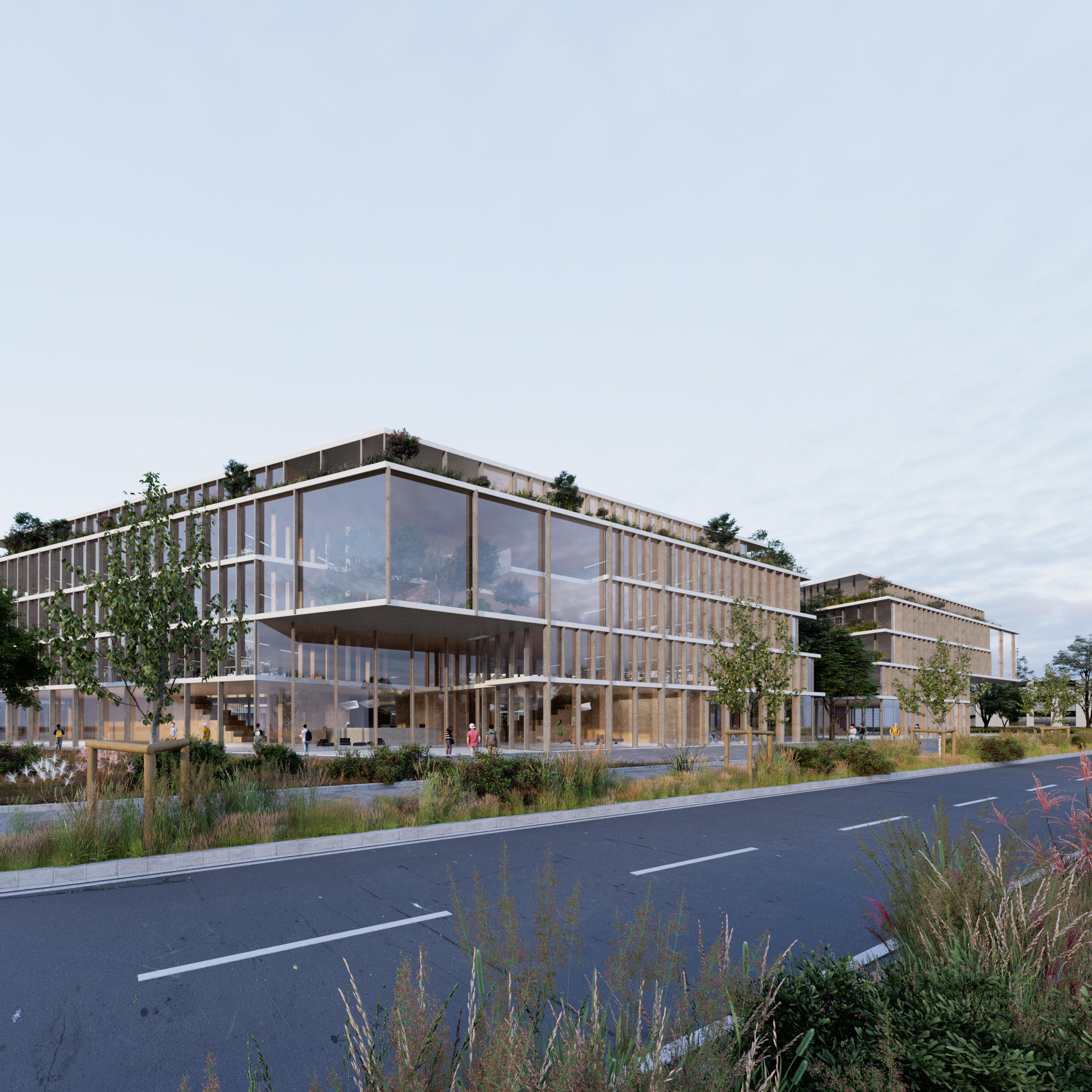
The project is based on a high-density mixed-use program distributed across four volumes and subject to strict urban, regulatory, and fire-safety constraints. The design needed to reconcile compartmentalization requirements, structural efficiency, and flexibility while maintaining a coherent urban composition.
The architectural approach combines modular parceling with a hybrid structure in concrete and timber, allowing large spans and adaptable floor layouts. Passive façade principles contribute to reducing operational energy demand, while integrated rainwater management and planted terraces support local ecological systems. The terraced massing improves daylight penetration and solar control, and the structural grid enables future subdivision or reconfiguration of the spaces.
The result is a 34,048 m² development designed to meet high sustainability standards, combining environmental performance, spatial flexibility, and long-term adaptability within a dense urban framework.
| Location | Cloche d'Or, LUX |
| Status | Under construction |
| Type | New build |
| Size | 46,087 m² |
| Collaboration | A2M and MORENO ARCHITECTURE & ASSOCIES, Felgen (TS), IDES (CPE), CBL (general contractor), Seco Expert (Facade and fire safety), Energy & Environnement (certification Breeam, Well et ACV calculation) |
| Certifications | WELL platinum, Breeam Outstanding, Calcul ACV, CPE AAA |
An interactive visual window into our planet's
changing climate, based on the most recent
measurements and climate model predictions
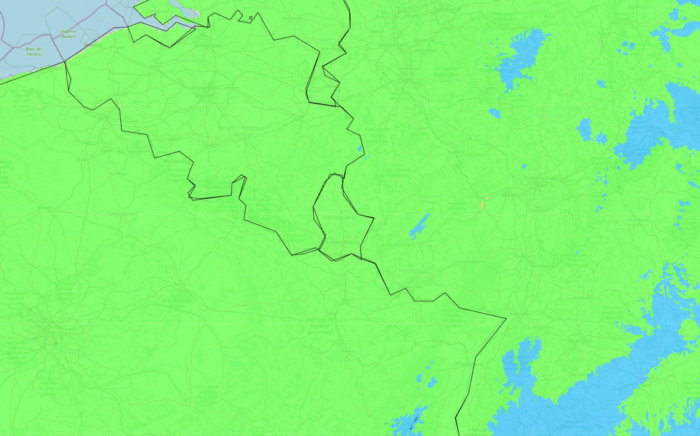
Luxembourg has a temperate oceanic climate (Köppen: Cfb), characterized by mild to cool winters and moderate summers, with no dry season. Rainfall is fairly evenly distributed throughout the year, and temperatures rarely reach extremes. Average summer highs range between 20–25°C (68–77°F), while winter lows typically hover around 0°C (32°F), with occasional frost or light snowfall. The climate is influenced by Atlantic weather patterns, contributing to its frequent cloud cover and humidity.