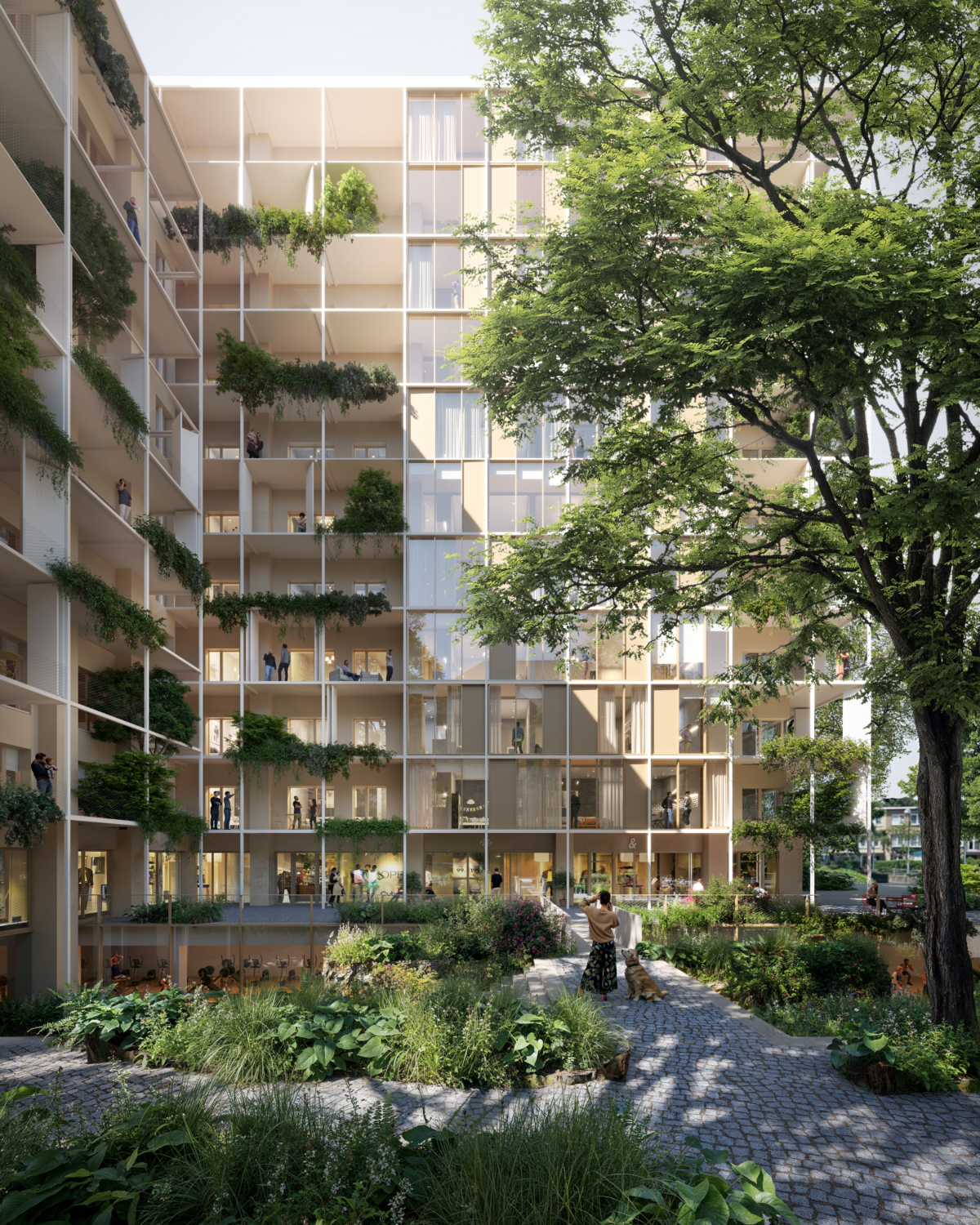
The Centre Sportif Belval is designed as a compact and energy-efficient building. Its orientation and volume reduce heat loss while allowing controlled natural daylight to enter the sports halls. Northern light provides even illumination without disturbing athletes, while natural ventilation supports indoor comfort whenever climatic conditions allow it. A high-performance building envelope limits energy demand, and the structural system is designed to remain clear and robust while minimizing material use. The building accommodates a wide range of sports activities while maintaining a strong relationship with the surrounding campus. By opening towards the public realm, it facilitates access and circulation for students and local users. The project combines functional performance with careful environmental design.
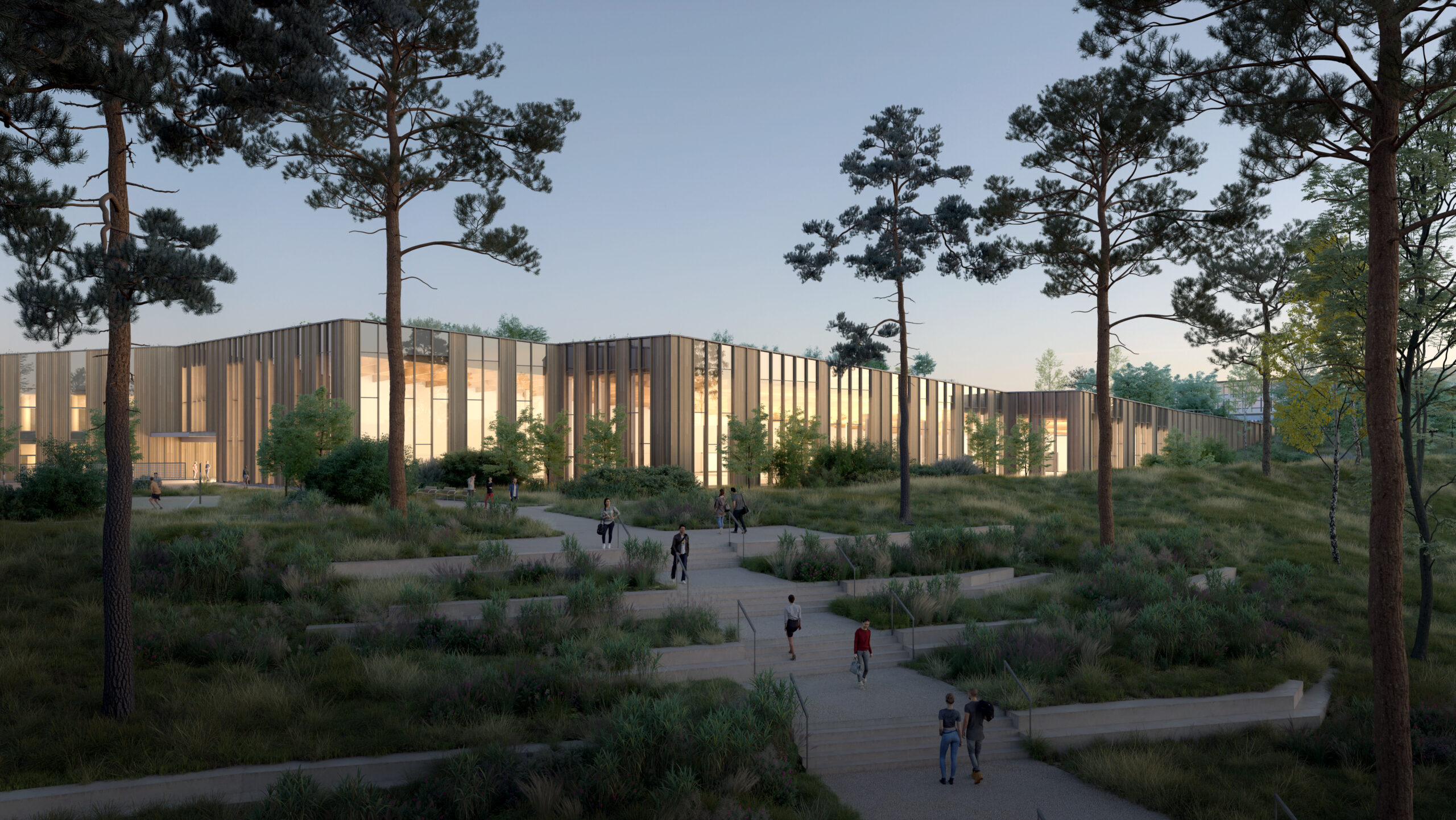
from the landscape.
- 2022 - ongoing
- Fonds Belval
- Architecture, Climate Design, Interior Architecture
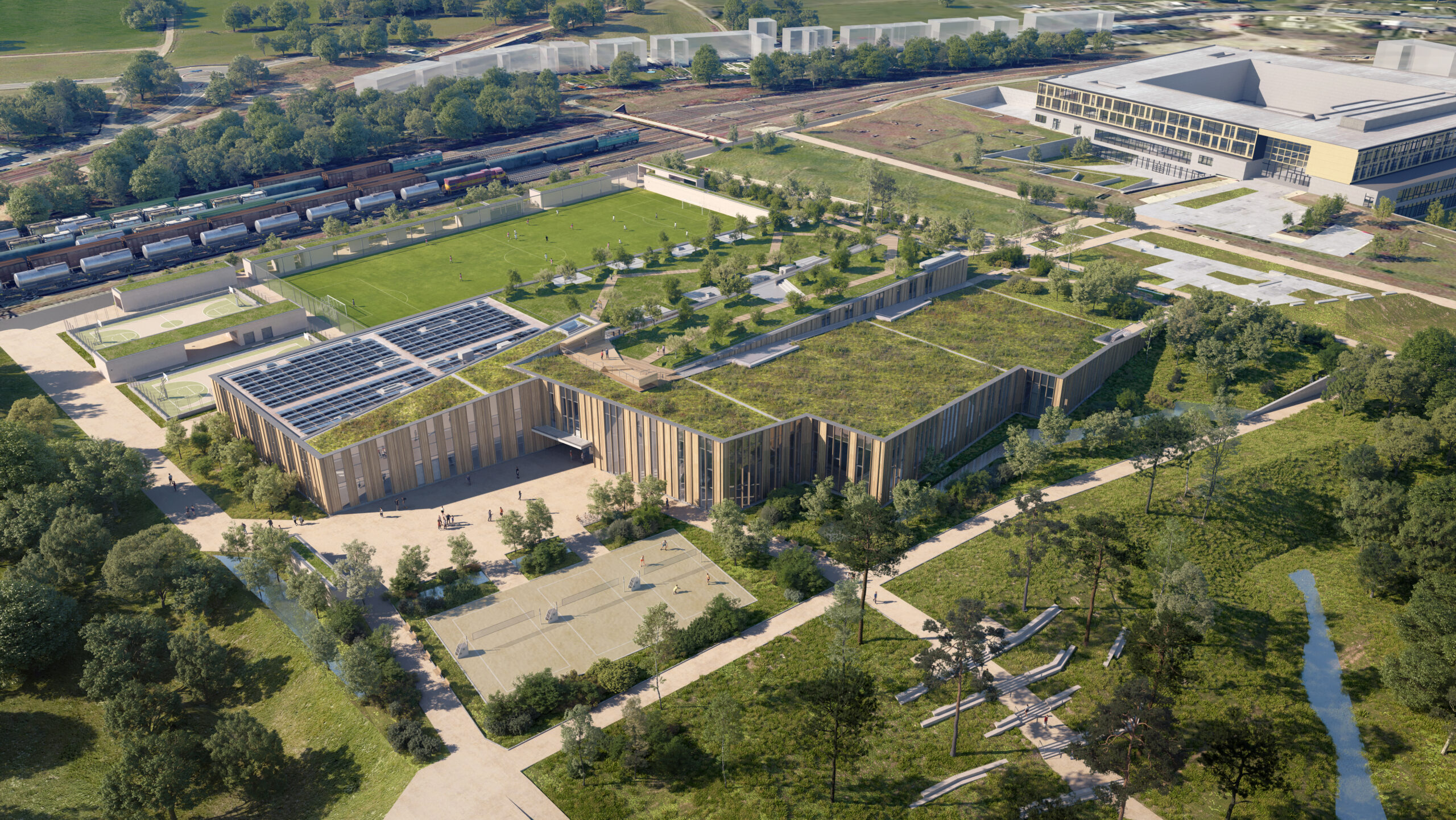
In Belval, former steel industry sites have gradually been transformed into a mixed urban district combining university facilities, housing and offices. As the area developed, the need for sports infrastructure for students, clubs and residents increased. The Centre Sportif Belval was conceived to meet this demand while integrating into a dense urban context still marked by its industrial past. The challenge was to avoid creating a purely functional sports hall with high energy consumption and little relation to its surroundings. Instead, the project aimed to deliver a building that contributes to the life of the campus and its neighborhood. The objective was therefore not only to provide sports facilities, but also to design an efficient and well-integrated building that supports the evolving urban fabric of Belval.
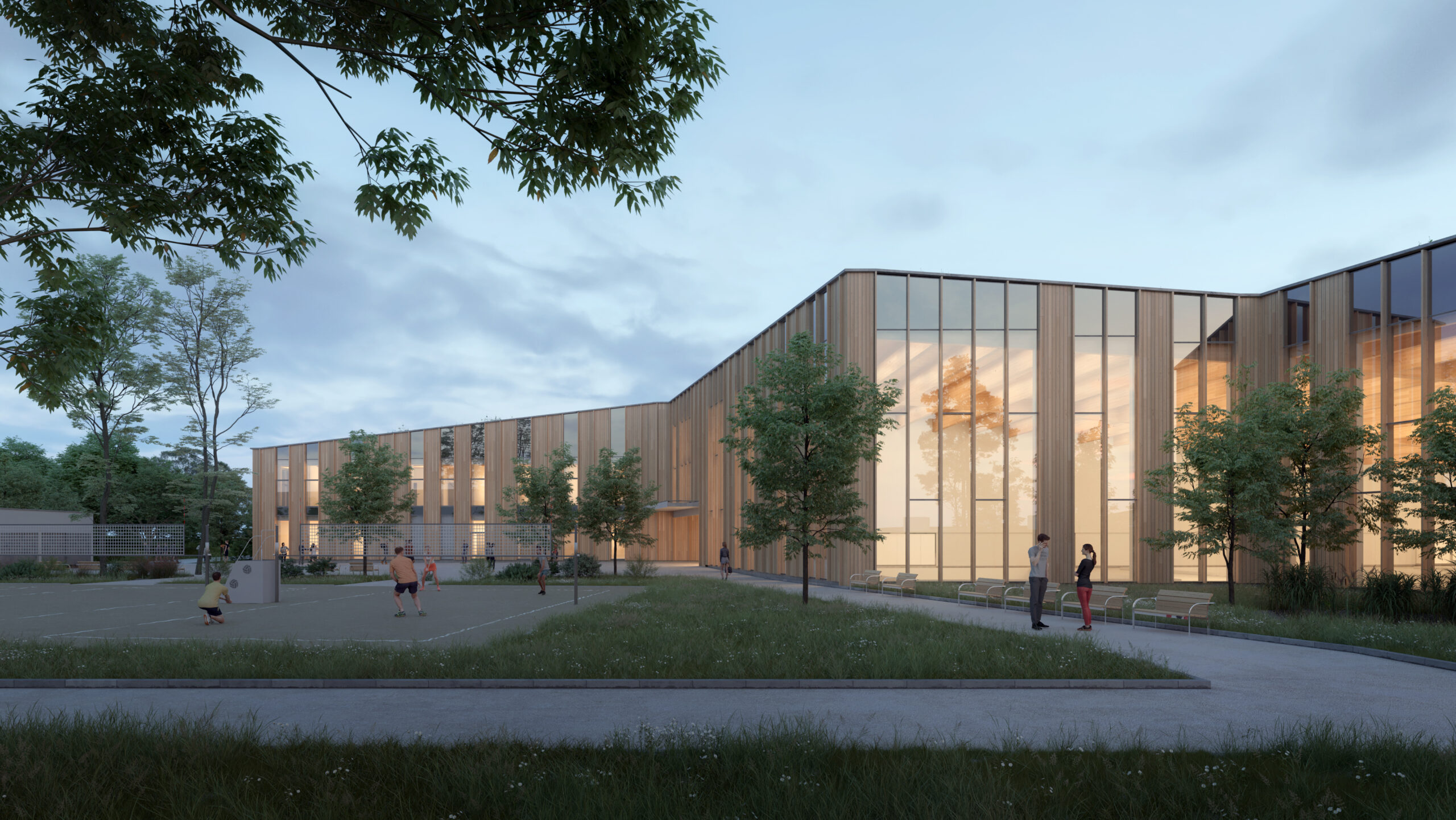
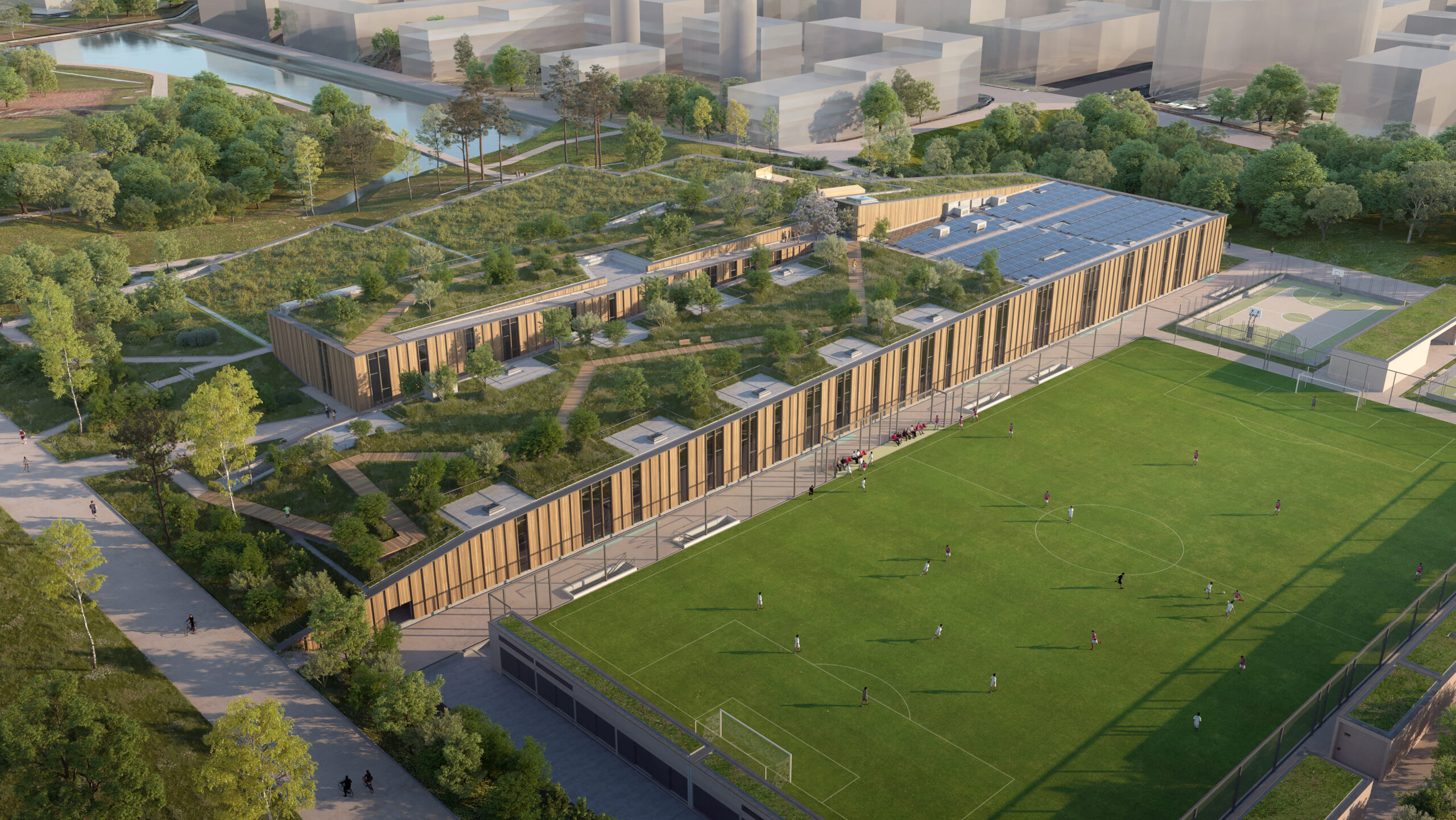
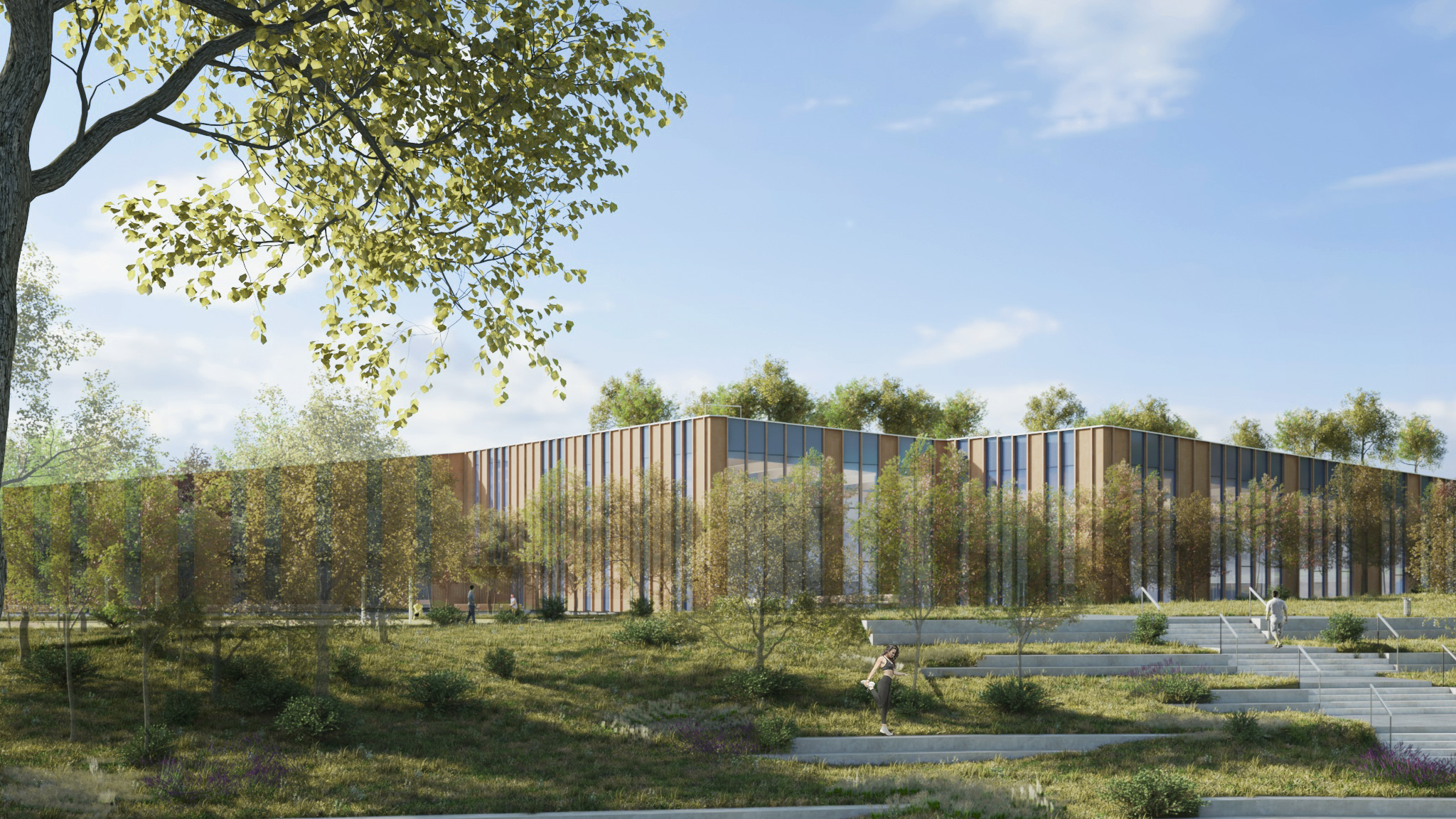
Beyond its primary function as a sports facility, the Centre Sportif Belval contributes to the social and urban life of the campus. It provides spaces where students, residents and sports clubs can train, meet and share activities. The project demonstrates that a sports hall can combine technical performance with a welcoming atmosphere. By limiting its energy consumption, the building reduces its environmental impact within the campus. At the same time, its open layout and accessible entrances strengthen the connection between the building and the surrounding public space. In a district shaped by an industrial past, the project introduces new forms of collective use centered around health, movement and social interaction.
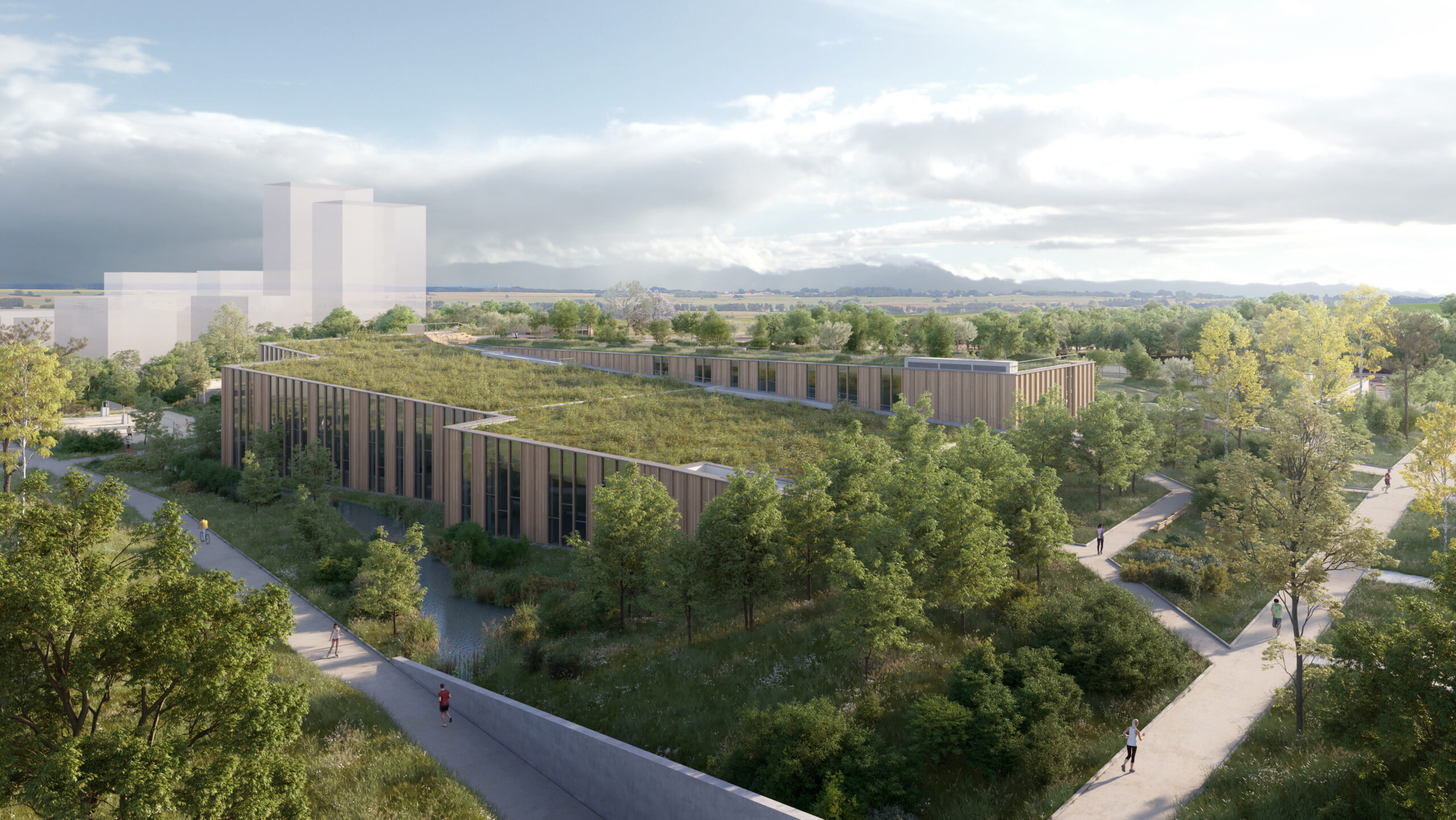
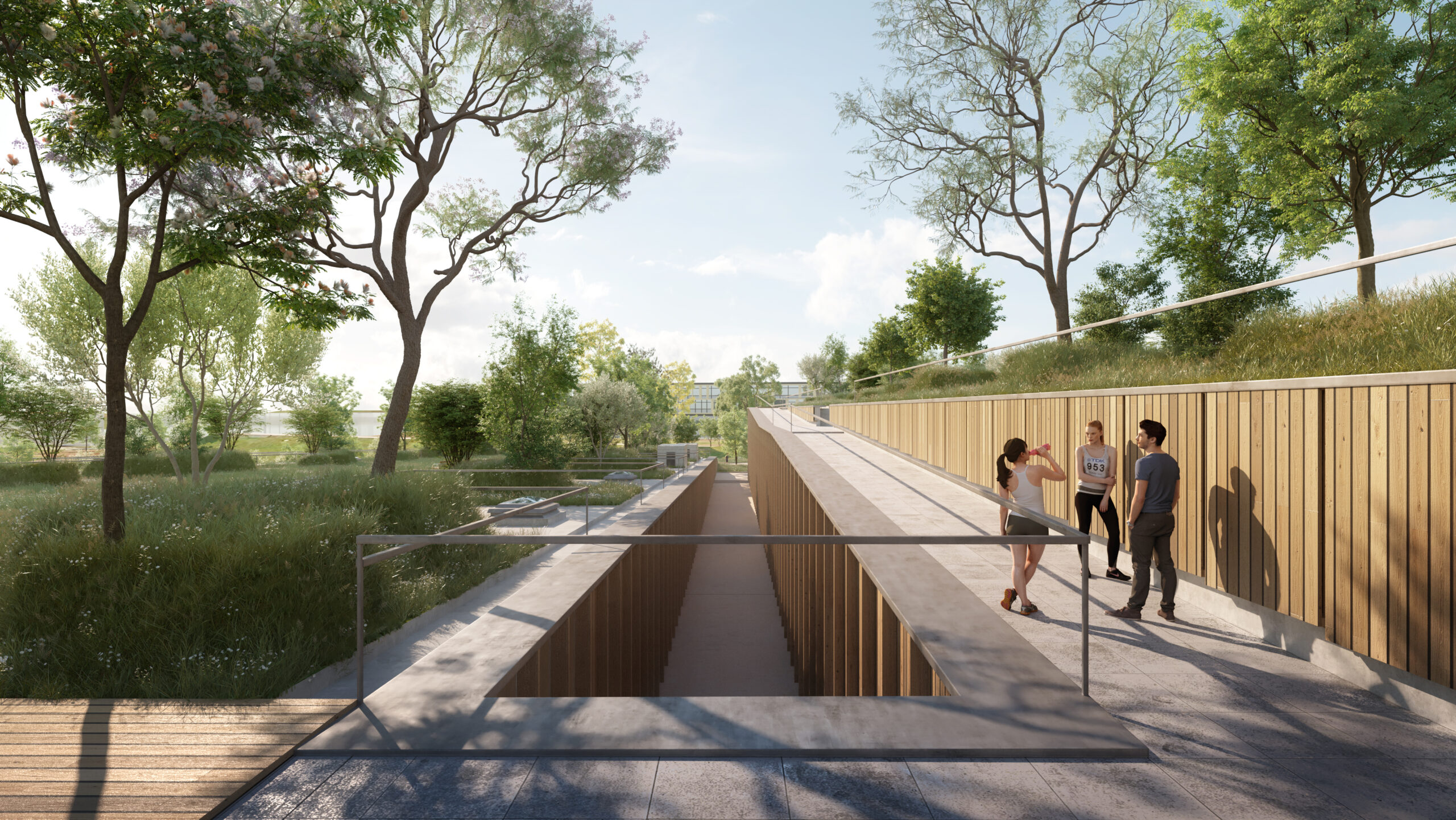
The project addressed two main challenges: integrating a large sports programmed within a dense urban context and reducing the high energy demand typically associated with sports infrastructures. The design strategy focused on a compact building volume, optimized orientation and a highly insulated envelope to maximize passive energy gains. These principles are complemented by efficient technical systems and the integration of renewable energy production. The resulting building achieves high energy performance while ensuring stable thermal comfort and good daylight conditions for users. By combining architectural clarity with environmental efficiency, the Centre Sportif Belval offers a durable model for contemporary sports infrastructure.
| Location | Esch, LUX |
| Status | Ongoing |
| Procedure | Competition, 1st Prize |
| Size | 30,581 m² |
| Collaboration | A2M qnd MORENO ARCHITECTURE & ASSOCIES, Agence Babylone, S&A, TPF, ICB, Crea-tec, Archimen, Pronewtech |
An interactive visual window into our planet's
changing climate, based on the most recent
measurements and climate model predictions
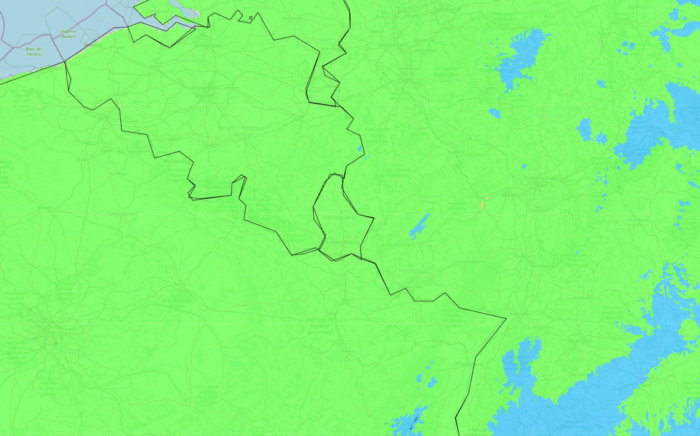
Luxembourg has a temperate oceanic climate (Köppen: Cfb), characterized by mild to cool winters and moderate summers, with no dry season. Rainfall is fairly evenly distributed throughout the year, and temperatures rarely reach extremes. Average summer highs range between 20–25°C (68–77°F), while winter lows typically hover around 0°C (32°F), with occasional frost or light snowfall. The climate is influenced by Atlantic weather patterns, contributing to its frequent cloud cover and humidity.